
Setores Econômicos e Regulação - tarde - 2024
Brazil: Online Learning Tools Harvest Children’s Data
Available at: https://www.hrw.org/news/2023/04/03/brazil- -online-learning-tools-harvest-childrens-data. Retrieved on: Feb 15, 2024. Adapted.
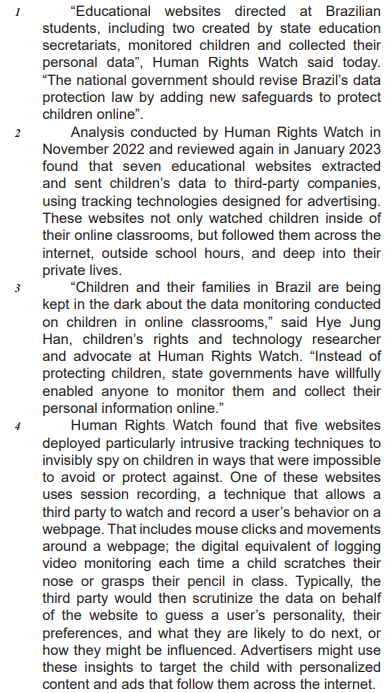
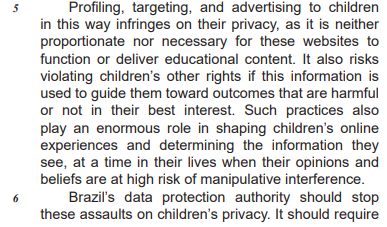
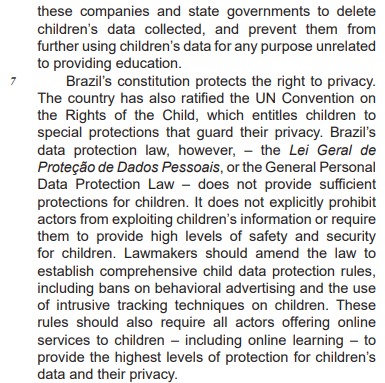
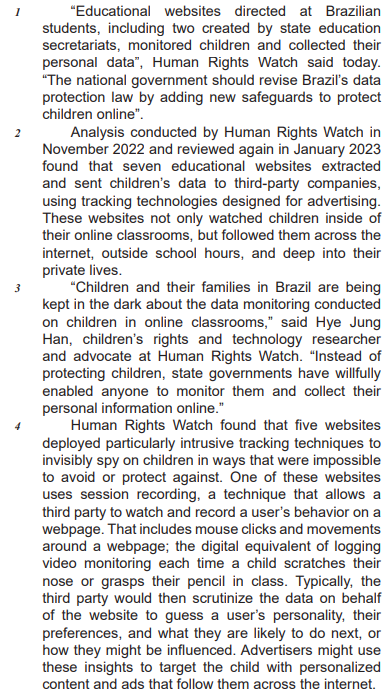
The main purpose of the text is to
Brazil: Online Learning Tools Harvest Children’s Data
Available at: https://www.hrw.org/news/2023/04/03/brazil- -online-learning-tools-harvest-childrens-data. Retrieved on: Feb 15, 2024. Adapted.
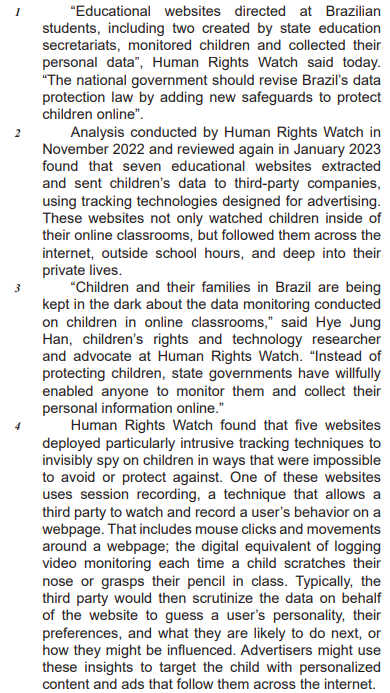
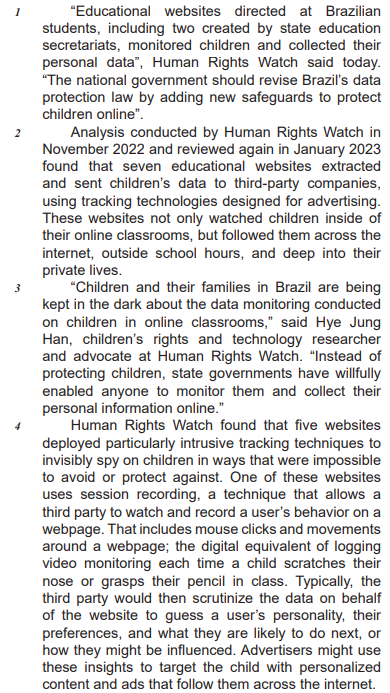
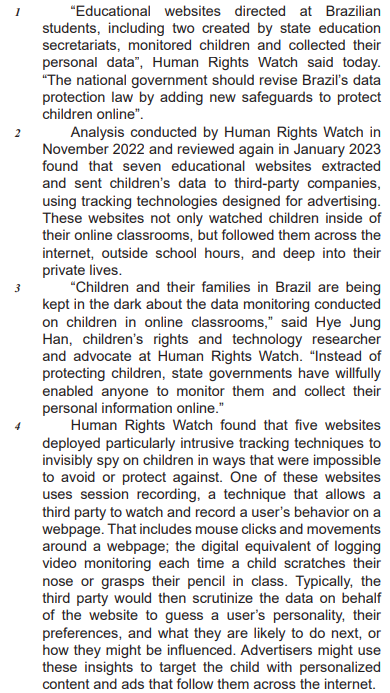
In the segment of paragraph 2 “These websites not only watched children inside of their online classrooms, but followed them across the internet”, the term them refers to
Brazil: Online Learning Tools Harvest Children’s Data
Available at: https://www.hrw.org/news/2023/04/03/brazil- -online-learning-tools-harvest-childrens-data. Retrieved on: Feb 15, 2024. Adapted.
In the excerpt of paragraph 2 “These websites not only watched children inside of their online classrooms, but followed them across the internet”, the expression not only [...] but indicates
Brazil: Online Learning Tools Harvest Children’s Data
Available at: https://www.hrw.org/news/2023/04/03/brazil- -online-learning-tools-harvest-childrens-data. Retrieved on: Feb 15, 2024. Adapted.
In paragraph 3, the statement “Instead of protecting children, state governments have willfully enabled anyone to monitor them and collect their personal information online” means that the permission given by state governments to third-party companies was
Brazil: Online Learning Tools Harvest Children’s Data
Available at: https://www.hrw.org/news/2023/04/03/brazil- -online-learning-tools-harvest-childrens-data. Retrieved on: Feb 15, 2024. Adapted.
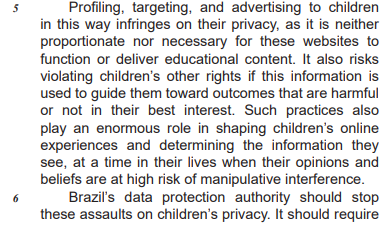
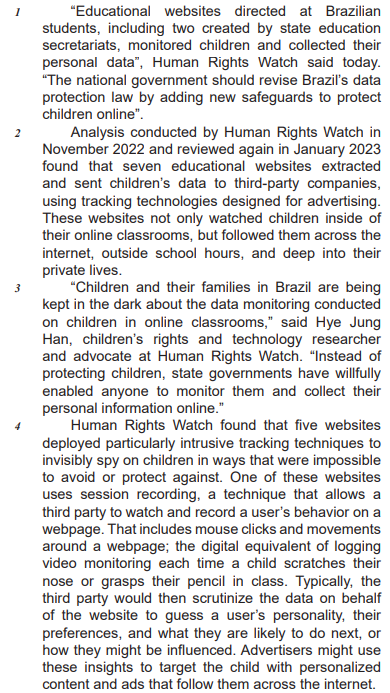
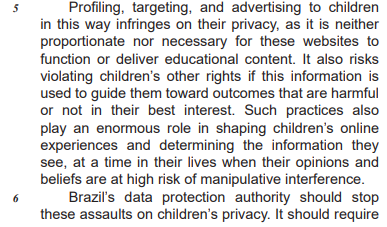
In the section of paragraph 4 “the third party would then scrutinize the data on behalf of the website to guess a user’s personality, their preferences, and what they are likely to do next”, the expression what they are likely to do next refers to the children’s
Brazil: Online Learning Tools Harvest Children’s Data
Available at: https://www.hrw.org/news/2023/04/03/brazil- -online-learning-tools-harvest-childrens-data. Retrieved on: Feb 15, 2024. Adapted.
In the section of paragraph 4 “the third party would then scrutinize the data on behalf of the website to guess a user’s personality, their preferences, and what they are likely to do next”, the term scrutinize indicates that the third-party company would
Brazil: Online Learning Tools Harvest Children’s Data
Available at: https://www.hrw.org/news/2023/04/03/brazil- -online-learning-tools-harvest-childrens-data. Retrieved on: Feb 15, 2024. Adapted.
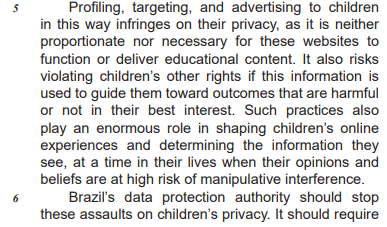
In the excerpt of paragraph 5 “It also risks violating children’s other rights if this information is used to guide them toward outcomes that are harmful or not in their best interest”, the word if indicates a
Brazil: Online Learning Tools Harvest Children’s Data
Available at: https://www.hrw.org/news/2023/04/03/brazil- -online-learning-tools-harvest-childrens-data. Retrieved on: Feb 15, 2024. Adapted.
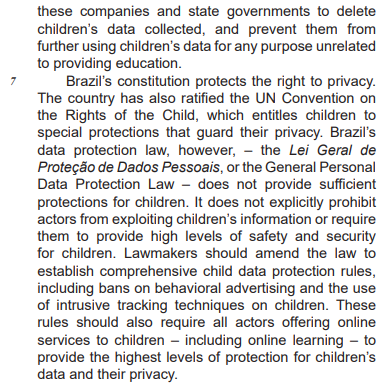
In the segment of paragraph 6 “Brazil’s data protection authority should [...] prevent them from further using children’s data for any purpose unrelated to providing education”, the word unrelated contains a prefix.
A prefix conveying the same idea is found in the word
Brazil: Online Learning Tools Harvest Children’s Data
Available at: https://www.hrw.org/news/2023/04/03/brazil- -online-learning-tools-harvest-childrens-data. Retrieved on: Feb 15, 2024. Adapted.
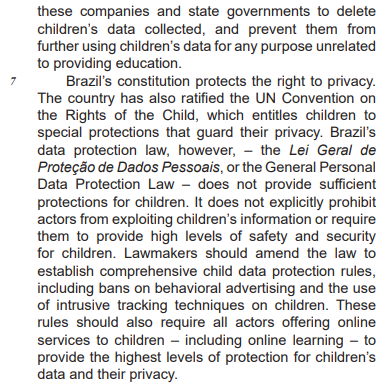
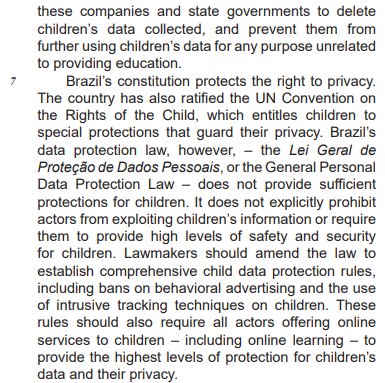
In paragraph 7, the statement “the General Personal Data Protection Law [...] does not explicitly prohibit actors from exploiting children’s information” means that the data protection law does not currently prevent educational websites from
Brazil: Online Learning Tools Harvest Children’s Data
Available at: https://www.hrw.org/news/2023/04/03/brazil- -online-learning-tools-harvest-childrens-data. Retrieved on: Feb 15, 2024. Adapted.
In the fragment of paragraph 7 “Lawmakers should amend the law to establish comprehensive child data protection rules”, the word should indicates a(n)