Vade Mecum Digital 2026De R$ 249,90 por 12x R$ 9,99 ou R$ 119,90 à vista
JurisHand AI Logo

Economista - 2010


Página 3  •  Total 70 questões
136861Questão 21|Inglês|superior
2010
CESGRANRIO

associated-text-1e4008792d23ce05a16ad12bd5beb60eddeb14666c52702bed4734bb21df7a4f-21-0.jpg

associated-text-1e4008792d23ce05a16ad12bd5beb60eddeb14666c52702bed4734bb21df7a4f-21-1.jpg

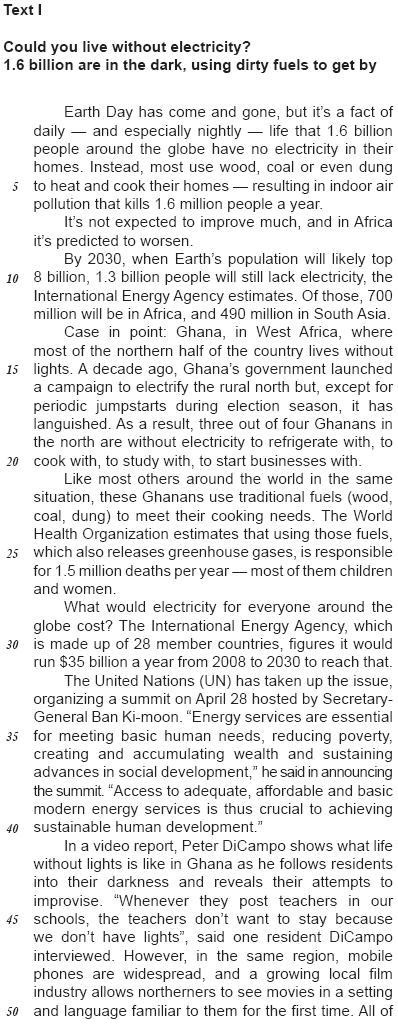
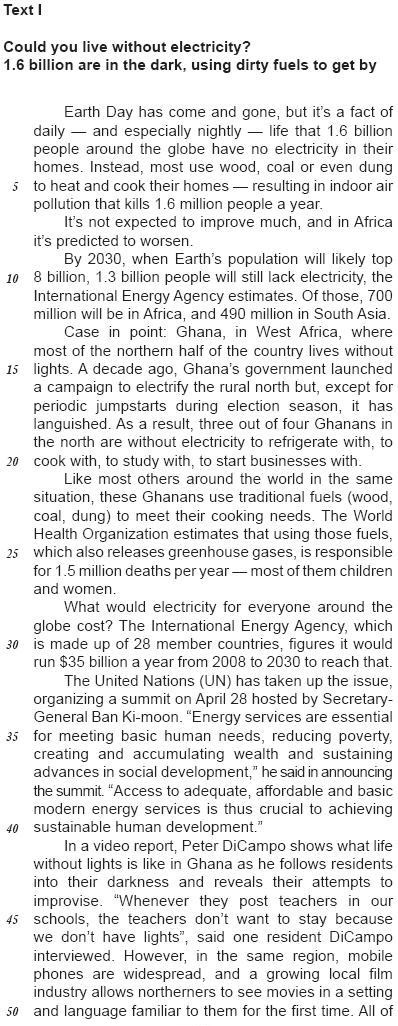
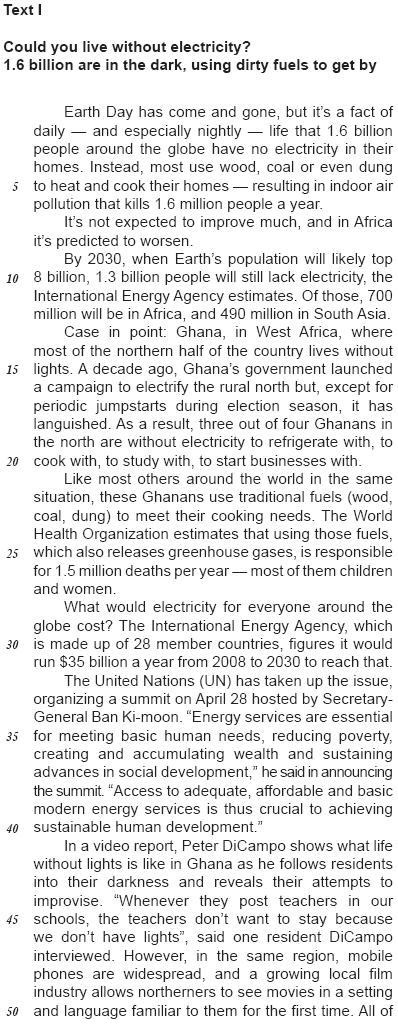
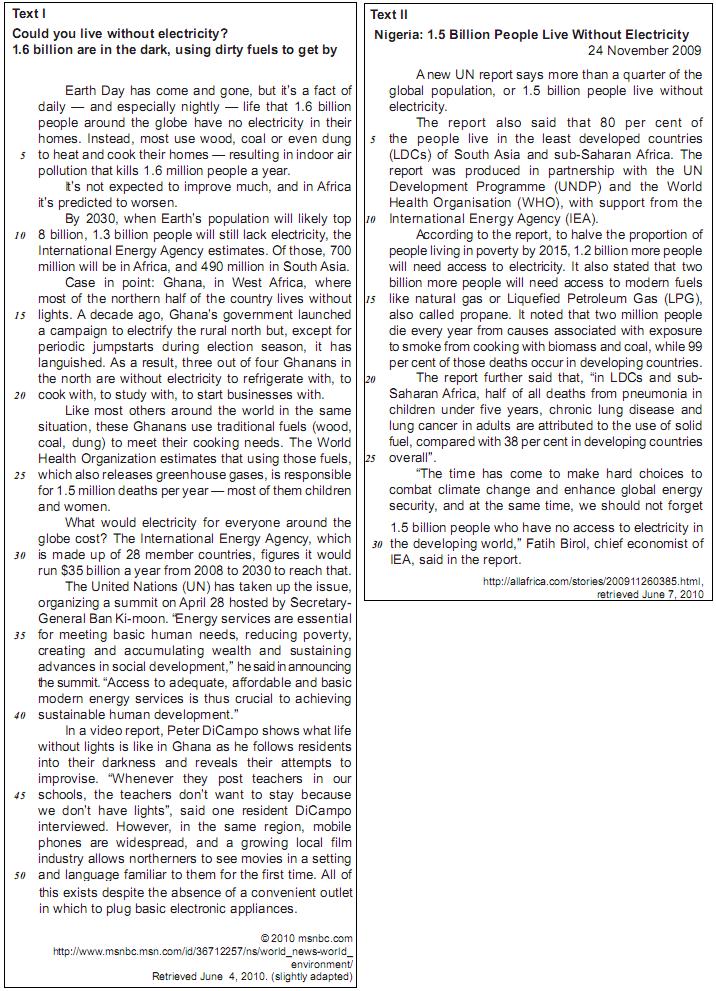
The author's main intention in Text I is to

  • A

    criticize the high costs of electricity in most African countries.

  • B

    defend the electrification of regions which lack modern energy services.

  • C

    convince the government of Ghana to invest in the mobile phone industry.

  • D

    suggest that some traditional fuels can be harmless substitutes to electricity in Africa.

  • E

    warn about the spread of lung diseases in African population due to the use of coal as fuel.

136862Questão 22|Inglês|superior
2010
CESGRANRIO

associated-text-1e4008792d23ce05a16ad12bd5beb60eddeb14666c52702bed4734bb21df7a4f-22-0.jpg

associated-text-1e4008792d23ce05a16ad12bd5beb60eddeb14666c52702bed4734bb21df7a4f-22-1.jpg

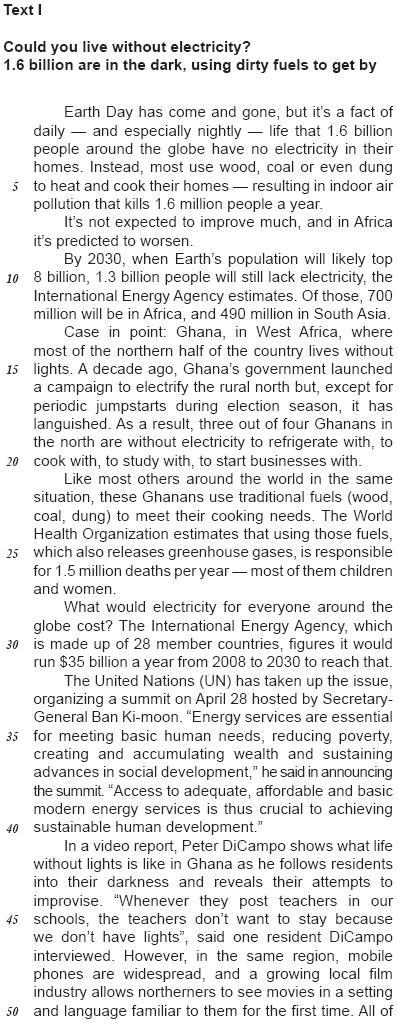
In "By 2030, when Earth's population will likely top 8 billion," (lines 9-10), " will likely " means the same as

  • A

    will certainly.

  • B

    will similarly.

  • C

    will probably.

  • D

    will eventually.

  • E

    will considerably.

136863Questão 23|Inglês|superior
2010
CESGRANRIO

associated-text-1e4008792d23ce05a16ad12bd5beb60eddeb14666c52702bed4734bb21df7a4f-23-0.jpg

associated-text-1e4008792d23ce05a16ad12bd5beb60eddeb14666c52702bed4734bb21df7a4f-23-1.jpg

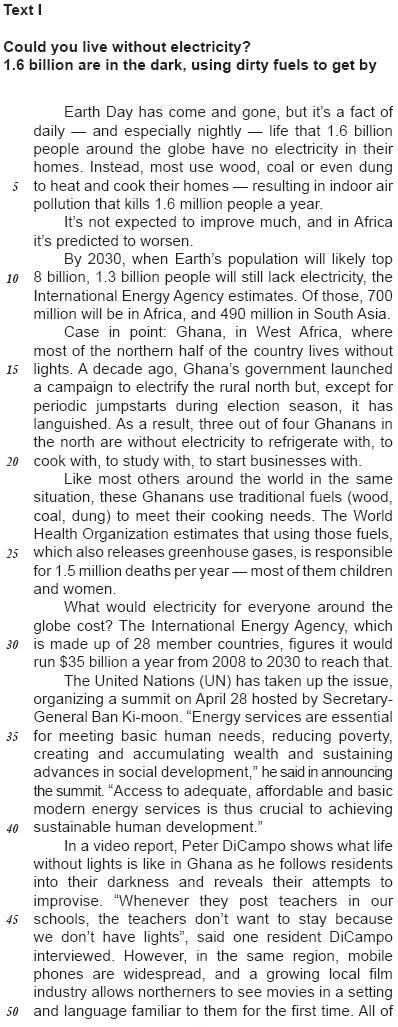
Ghana is mentioned in Text I because

  • A

    Ban Ki-moon, United Nations Secretary-General, was born there.

  • B

    its population of 1.3 billion people will still lack electricity in 2030.

  • C

    it is the only country in Africa to have mobile phones and a growing film industry.

  • D

    it is a typical example of a country that suffers with the absence of investments in electricity.

  • E

    it has celebrated Earth Day stimulating the population to use coal for cooking and heating homes.

136864Questão 24|Inglês|superior
2010
CESGRANRIO

associated-text-1e4008792d23ce05a16ad12bd5beb60eddeb14666c52702bed4734bb21df7a4f-24-0.jpg

associated-text-1e4008792d23ce05a16ad12bd5beb60eddeb14666c52702bed4734bb21df7a4f-24-1.jpg

The expression in boldface introduces the idea of consequence in

  • A

    " Instead , most use wood, coal or even dung to heat and cook their homes -" (lines 4-5)

  • B

    ". but , except for periodic jumpstarts during election season," (lines 16-17)

  • C

    "Access to adequate, affordable and basic modern energy services is thus crucial to achieving sustainable human development." (lines 38-40)

  • D

    " However , in the same region, mobile phones are widespread," (lines 47-48)

  • E

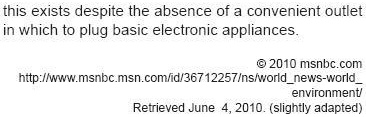
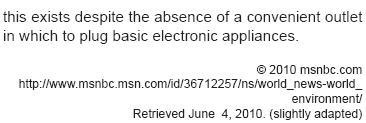
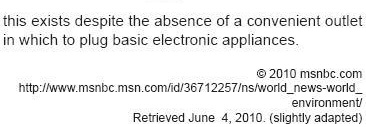
    "All of this exists despite the absence of a convenient outlet in which to plug basic electronic appliances." (lines 50-52)

136865Questão 25|Inglês|superior
2010
CESGRANRIO

associated-text-1e4008792d23ce05a16ad12bd5beb60eddeb14666c52702bed4734bb21df7a4f-25-0.jpg

associated-text-1e4008792d23ce05a16ad12bd5beb60eddeb14666c52702bed4734bb21df7a4f-25-1.jpg

Based on the meanings in the text, the two items are synonymous in

  • A

    "... worsen." (line 8) - improve.

  • B

    "... made up of..." (line 30) - composed of.

  • C

    "figures..." (line 30) - numbers.

  • D

    "has taken up..." (line 32) - has discarded.

  • E

    "affordable..." (line 38) - expensive.

136866Questão 26|Inglês|superior
2010
CESGRANRIO

associated-text-1e4008792d23ce05a16ad12bd5beb60eddeb14666c52702bed4734bb21df7a4f-26-0.jpg

associated-text-1e4008792d23ce05a16ad12bd5beb60eddeb14666c52702bed4734bb21df7a4f-26-1.jpg

In paragraph 7 (lines 32-40), Ban Ki-moon states that energy services
  • A

    cannot aid nations to overcome difficulties in human development.

  • B

    can play a fundamental role in the fulfillment of basic human needs.

  • C

    are unavailable in poor countries with sustained social development.

  • D

    will have no impact on promoting social advances or on reducing poverty.

  • E

    will help poor nations accumulate wealth and produce electrical appliances.

136867Questão 27|Inglês|superior
2010
CESGRANRIO

associated-text-1e4008792d23ce05a16ad12bd5beb60eddeb14666c52702bed4734bb21df7a4f-27-0.jpg

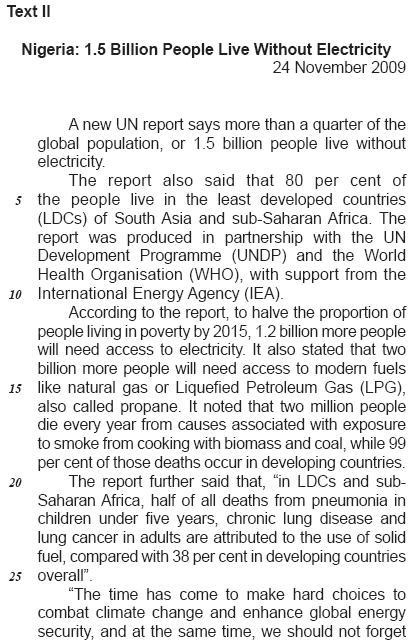
Both Text I and Text II

  • A

    report on the high death rates in Africa and Asia resulting from the use of electricity.

  • B

    condemn African countries that are trying to offer their populations healthy living conditions.

  • C

    blame the UN for the difficulties Africans have faced due to the inefficient electricity provisions in the continent.

  • D

    announce that the use of fuels such as natural gas and propane reduced the death rates in developing countries.

  • E

    argue for the implementation of widespread access to electricity in developing nations so as to reduce poverty.

136868Questão 28|Direito Constitucional|superior
2010
CESGRANRIO

associated-text-1e4008792d23ce05a16ad12bd5beb60eddeb14666c52702bed4734bb21df7a4f-28-0.jpg

associated-text-1e4008792d23ce05a16ad12bd5beb60eddeb14666c52702bed4734bb21df7a4f-28-1.jpg

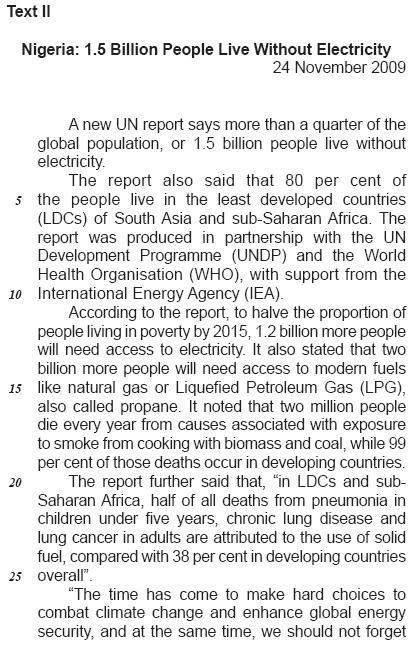
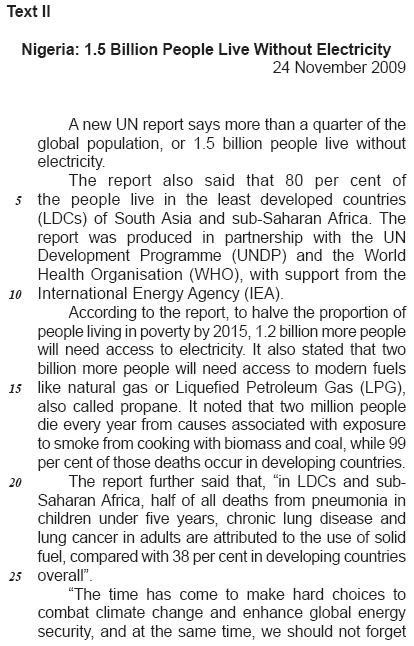
Considering some of the numerical figures in Text II,

  • A

    "... 1.5 billion ..." (line 2) refers to more than 25% of the world population who survive without access to electricity.

  • B

    "... 80 per cent ..." (line 4) refers to the share of the total world population living in the least developed countries.

  • C

    "1.2 billion ..." (line 12) refers to the amount of global population that will certainly live without electricity in 2015.

  • D

    "... 99 per cent ..." (lines 18-19) refers to the percentage of deaths resulting from smoking cigarettes in developing countries.

  • E

    "... 38 per cent ..." (line 24) refers to the amount of adults who die of lung disease in the sub-Saharan Africa.

136869Questão 29|Inglês|superior
2010
CESGRANRIO

associated-text-1e4008792d23ce05a16ad12bd5beb60eddeb14666c52702bed4734bb21df7a4f-29-0.jpg

associated-text-1e4008792d23ce05a16ad12bd5beb60eddeb14666c52702bed4734bb21df7a4f-29-1.jpg

In "It also stated that two billion more people will need access to modern fuels." (lines 13-14 - Text II) , " it " refers to

  • A

    "... report," (line 11)

  • B

    "... proportion ..." (line 11)

  • C

    "... poverty ..." (line 12)

  • D

    "... access ..." (line 13)

  • E

    "... electricity." (line 13)

136870Questão 30|Inglês|superior
2010
CESGRANRIO

associated-text-1e4008792d23ce05a16ad12bd5beb60eddeb14666c52702bed4734bb21df7a4f-30-0.jpg

associated-text-1e4008792d23ce05a16ad12bd5beb60eddeb14666c52702bed4734bb21df7a4f-30-1.jpg

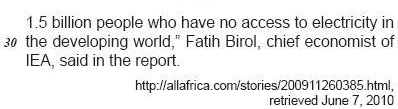
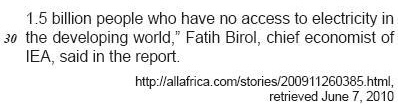
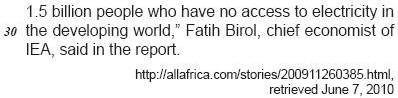
According to Fatih Birol in Paragraph 5 (lines 26-31 - Text II), it

  • A

    will be impossible to meet the large demand for energy in the developing world.

  • B

    will be imperative in the next century to find solutions for energy and climate problems around the globe.

  • C

    is useless to combat changes in weather and promote wide access to energy nowadays.

  • D

    is time to find ways to fight climate change, improve energy security and expand the access to electricity.

  • E

    may be necessary to take violent actions against the unfair distribution of energy in developing nations.

Economista - 2010 | Prova